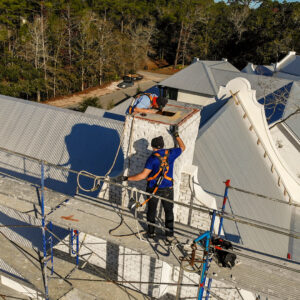
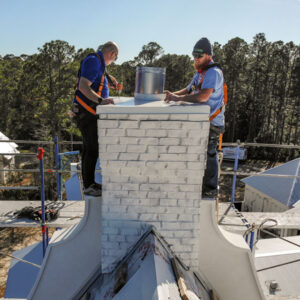
Why Every Florida Chimney Needs Professional Waterproofing
If you own a home on the Gulf Coast, your chimney is fighting a battle every single day that chimneys in drier climates never have to face. Between subtropical humidity, torrential summer downpours, salt-laden coastal air, and the annual threat of tropical storms and hurricanes, Florida chimneys absorb more water stress than almost anywhere else in the country. Chimney waterproofing is the single most cost-effective way to stop that water before it becomes a five-figure masonry repair.
As CSIA-Certified Sweeps who have inspected and treated chimneys across Pensacola, Destin & Panama City Beach since 1998, we can tell you firsthand: nearly every major chimney rebuild we’re called out for started as a leak nobody waterproofed in time. Here’s what’s really happening inside your chimney, why Florida homes are especially at risk, and how professional waterproofing stops the damage before it starts.
What Is Chimney Waterproofing, and Why Does It Matter So Much Here?
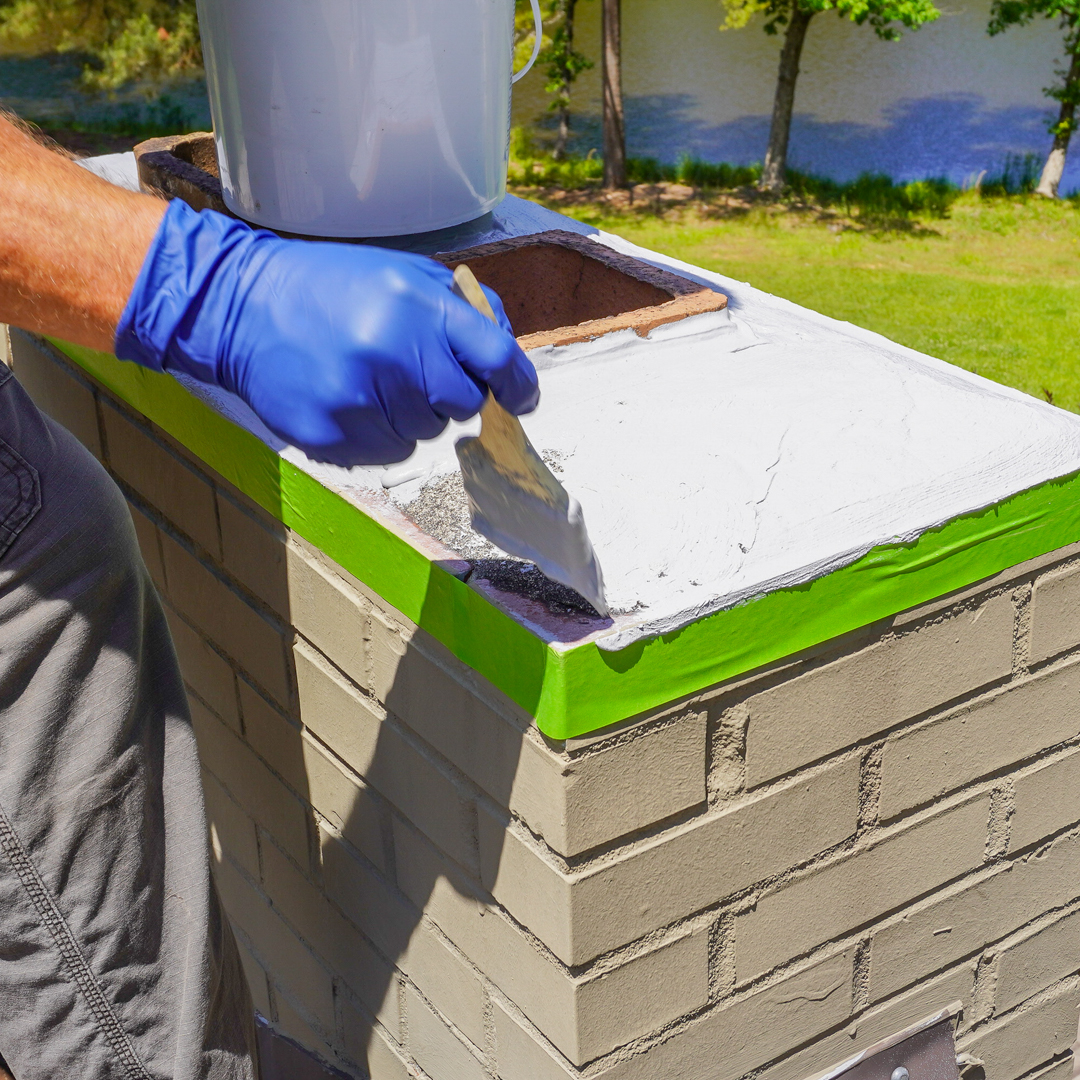
Chimney waterproofing is the application of a specialized, vapor-permeable sealant to the exterior masonry and the chimney crown — the concrete cap at the very top of the structure. Unlike a paint-on sealer or a generic concrete coating, professional-grade siloxane and silane-based sealants penetrate deep into brick, mortar, and concrete, bonding at a molecular level to repel liquid water while still letting trapped moisture vapor escape outward.
That “breathability” is the detail most homeowners — and unfortunately some handymen — get wrong. A non-breathable coating (like standard paint or acrylic sealer) can actually trap moisture inside the masonry, accelerating the very damage it was supposed to prevent. A properly applied, breathable waterproofing treatment does the opposite: it blocks rain and humidity from getting in while allowing residual moisture to evaporate out, protecting the chimney from the inside and the outside at once.
Over time, without this protection, Florida’s brick, mortar, and concrete crowns crack and crumble under constant wet-dry cycling, sun exposure, and salt air. Once those micro-cracks form, they become highways for water intrusion — and the clock starts ticking on much bigger problems.
The Hidden Cost of a Leaking Chimney
Water doesn’t stop once it gets past the masonry surface. It moves inward and downward, and it can damage:
- Chimney liners — the flue’s first line of defense against heat and combustion byproducts
- Roofs, ceilings, walls, and flooring near the chimney chase
- Fireplace dampers, causing rust, warping, and stuck operation
- Fireboxes and fireplaces, including the firebrick and mortar inside
- Chimney masonry below the roofline, where deterioration is hardest to spot
Left unaddressed, chronic chimney leaks are the leading cause of three of the most expensive outcomes a homeowner can face:
- A leaning or structurally unstable chimney that requires partial or full rebuild
- Toxic mold growth that spreads through wall cavities and attic spaces, often undetected for months
- In rare but serious cases, a house fire, triggered by compromised liners or damaged dampers
A waterproofing treatment that costs a few hundred dollars today is dramatically cheaper than a masonry rebuild, mold remediation, or emergency repair after storm season — this is preventative maintenance in the truest sense.
Why Florida’s Climate Makes This Non-Negotiable
Homeowners in drier states can sometimes get away with skipping chimney waterproofing for years. On the Gulf Coast, that’s a much riskier bet, for a few specific reasons:
- High year-round humidity keeps masonry damp longer, extending the window for water to seep in and slowing natural drying between rain events.
- Salt-laden coastal air in Pensacola and Destin accelerates corrosion of flashing, chimney caps, and metal components while contributing to masonry breakdown.
- Intense summer thunderstorms and hurricane season deliver wind-driven rain that hits chimneys horizontally, forcing water into cracks and joints that would stay dry in a calmer climate.
- Freeze-thaw isn’t the culprit here — heat-and-moisture cycling is. Florida’s chimneys expand and contract daily between scorching afternoon heat and humid evenings, which stresses mortar joints and crown seals differently than in colder states, but just as destructively.
That combination is exactly why a chimney that looks fine from the driveway can be quietly failing on the inside.
Warning Signs Your Chimney Masonry Is Already Leaking
Advanced signs — the leak has been happening for a while:
- Water pooling in the firebox after rain
- Spalling (flaking, popping, or crumbling) bricks
- Damp, discolored patches on walls or ceilings near the fireplace
- Musty odors or visible moisture in the attic near the chimney chase
- A fireplace damper that’s squeaky, rusted, or hard to open and close
Early signs — catch it now and save thousands later:
- Hairline cracks in bricks or the chimney crown
- Dusty, crumbling mortar joints
- Efflorescence — white, chalky mineral deposits left behind as water leaches salts out of the masonry
- Loose, rusted, or unseated flashing where the chimney meets the roofline
If you notice any of these signs, don’t wait for your annual inspection — call a licensed chimney professional right away. Small problems caught early are inexpensive to fix. The same problems ignored for another rainy season rarely stay small.
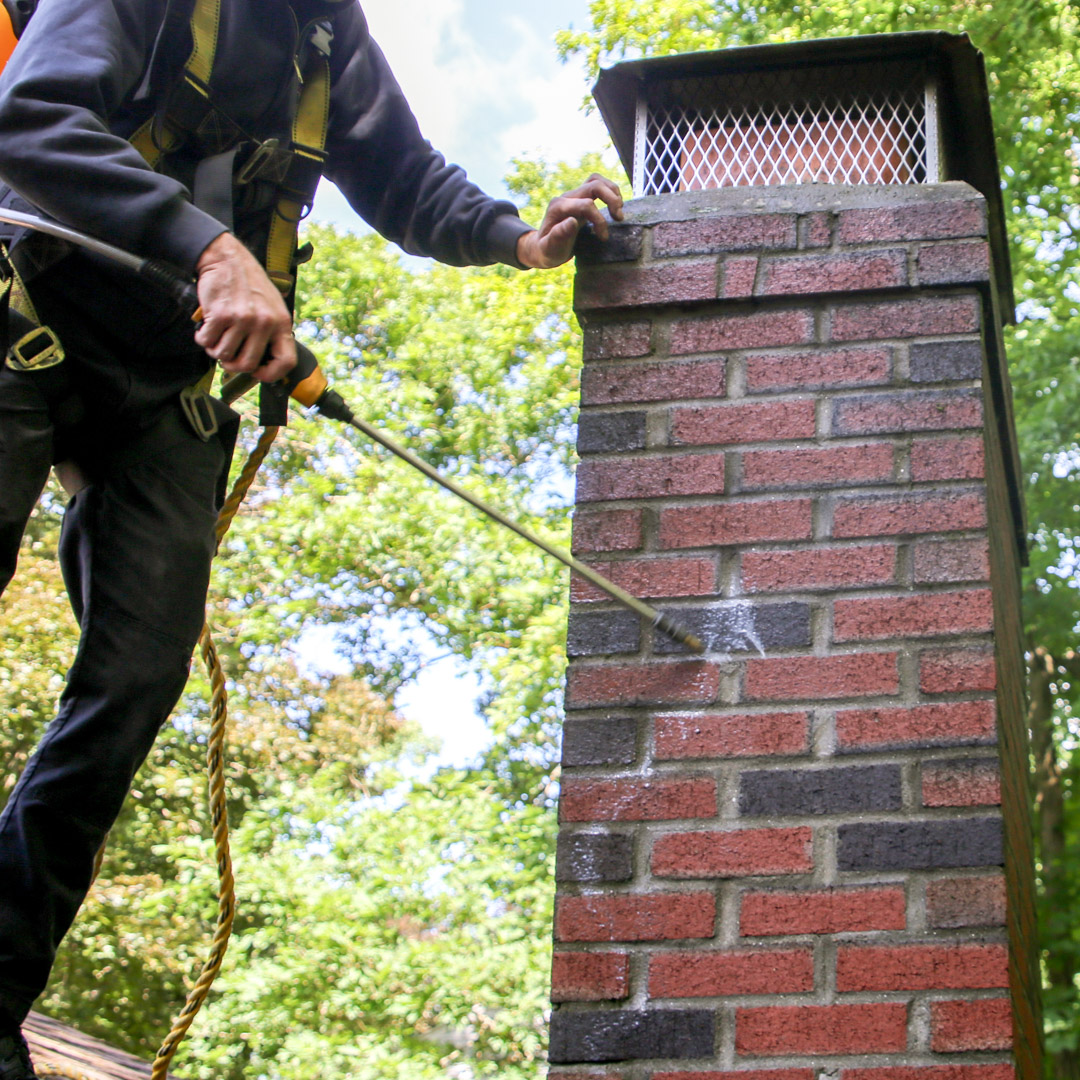
An annual chimney inspection will look for leaks and other types of damage and malfunction in the overall chimney system. And remember: if you spot obvious signs of chimney trouble on your own, don’t wait for your next scheduled inspection. Call and get a technician out to your home immediately.
Key Takeaways
- Chimney waterproofing protects Gulf Coast chimneys from severe water damage caused by humidity, salt air, and storms.
- Using breathable siloxane and silane-based sealants prevents moisture from entering while allowing trapped vapor to escape.
- Ignoring waterproofing can lead to costly repairs, including structural instability, mold growth, and potential house fires.
- Homeowners should waterproof typically every 7–10 years, especially after storms, to maintain chimney integrity.
- Professional inspections can catch early signs of leaks, making timely waterproofing crucial for long-term protection.
How Professional Chimney Waterproofing Works, Step by Step
A quality waterproofing job is a process, not a single spray-and-go service. Here’s how it typically unfolds when done right:
- Full inspection. We examine the chimney from crown to base for existing cracks, spalled brick, failed mortar joints, and flashing issues. Waterproofing over damage just seals the problem in — repairs always come first.
- Low-pressure cleaning. Dirt, algae, mildew, and existing efflorescence are washed away using low-pressure methods. High-pressure washing can force water deeper into already-compromised masonry, so it’s avoided.
- Masonry and crown repairs. Cracked mortar joints are repointed, spalled brick is replaced, and a damaged chimney crown is patched or rebuilt before any sealant goes on.
- Drying time. Florida humidity means masonry can take longer to dry than the product label suggests — this is where scheduling and experience matter.
- Sealant application. A breathable siloxane- or silane-based chimney waterproofing sealant is applied in multiple coats, allowing it to fully saturate the brick and mortar rather than just glaze the surface.
- Crown and cap attention. The chimney crown often gets a separate flexible crown sealer, and we check that your chimney cap is properly sized and sealed to keep rain, embers, and animals out of the flue.
Done in this order, a professional-grade treatment typically protects Gulf Coast masonry for 7 to 10 years before reapplication is needed — coastal, salt-exposed chimneys on the shorter end of that range, and inland homes on the longer end.
How Often Should You Waterproof Your Chimney in Florida?
There’s no single answer for every home, but a good rule of thumb for Pensacola and Destin homeowners:
- First-time waterproofing: Typically recommended within 5–10 years of construction or the last full masonry rebuild.
- Reapplication: Every 7–10 years for most Gulf Coast homes; closer to 7 years for homes directly exposed to coastal salt air.
- After any named storm: Have your chimney checked for lifted flashing, new crown cracks, or cap damage — even storms that only brush the coast can cause hidden issues.
- Best time to schedule: Late fall through early spring, when drier stretches of weather give sealants the best chance to cure properly before the next round of summer storms.
Pairing waterproofing with annual chimney inspections and regular sweeping (if you burn wood) is the most effective long-term protection plan for any Florida chimney.
Frequently Asked Questions
Does chimney waterproofing stop all leaks?
It stops water intrusion through the masonry and crown, which is the most common leak source. Leaks caused by damaged flashing, a missing chimney cap, or structural cracks need those specific repairs addressed alongside waterproofing for full protection.
Will waterproofing change how my chimney looks?
No. Quality siloxane- and silane-based sealants go on clear and dry invisible, so your chimney keeps its original appearance while gaining a powerful, breathable barrier against water.
Can I waterproof my own chimney?
We don’t recommend it. Using the wrong product (like a non-breathable acrylic sealer) can trap moisture and worsen the damage, and applying sealant over existing cracks or spalled brick without repairs first is a common — and expensive — mistake.
Is chimney waterproofing worth it for Florida homes specifically?
Yes, more than almost anywhere else in the country. The combination of humidity, heavy rain, salt air, and hurricane season puts Gulf Coast chimneys under more sustained water stress than most other climates, making waterproofing one of the highest-return maintenance investments a homeowner can make.
Schedule Your Chimney Inspection Today
While you can spot some warning signs on your own, only a CSIA-Certified chimney inspector has the training and tools to fully evaluate your chimney system — masonry, crown, flashing, liner, damper, and firebox — and catch problems before they become emergencies.
Doodlebuggers Fireplace, Grill & Outdoor Store has been solving chimney problems for Gulf Coast homeowners since 1998. We handle chimney waterproofing, leak repair, chimney sweeping, masonry repairs, and full CSIA-standard inspections for homes throughout Pensacola and Destin. If you suspect a leak, don’t wait for your next scheduled visit — reach out today.
Call a chimney expert now:
📞 Pensacola, FL: 850-660-7231
📞 Destin, FL: 850-706-7263
Or reach out anytime through our Schedule Now and we’ll get back to you promptly.