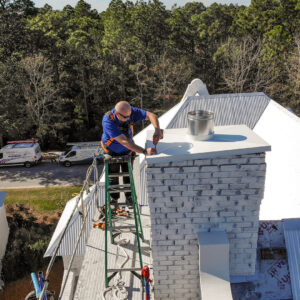
Pro Tips for the Prevention of Chimney Fires
Chimney service companies regularly respond to the aftermath of chimney fires, performing repairs and component replacements to get the chimney back into safe working order. And almost every time, the technicians know that it could have been so easy for the homeowner to dramatically reduce the chance of a chimney fire starting in the first place. Doodlebuggers Fireplace, Grill & Outdoor Store of Pensacola, FL, and Destin, FL, would like to share a few pro tips on keeping chimney fires from happening in your home.
Chimney Fires 101
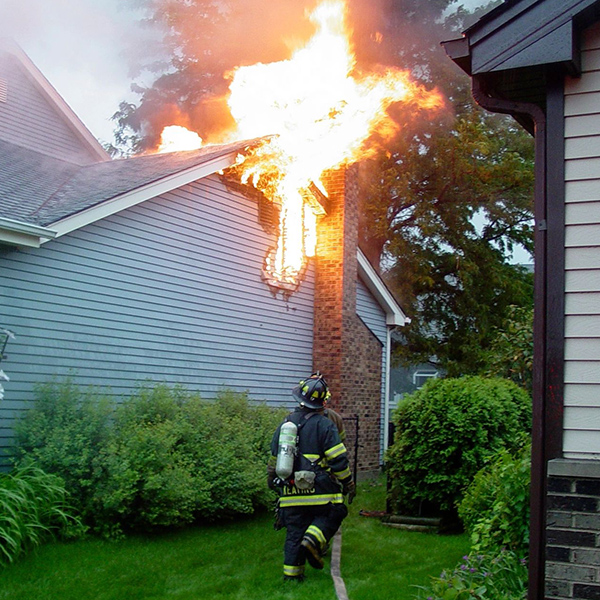
Most chimney fires start when built-up creosote ignites in the flue. Some fires are huge; others are small and go out on their own before being noticed. But all chimney fires can be destructive. Creosote builds up when smoke condenses in a flue. Even an eighth of an inch of this substance can erupt into a fire. The key to preventing chimney fires, therefore, is keeping creosote at a minimum.
Less smoke = less creosote
Here are some ways to create less smoke with your wood fires.
Burn Dry Wood
Dry firewood is much less smoky than wood that hasn’t had enough time to cure.
Opt for Hardwoods
Hardwoods, such as maple, hickory and oak, don’t make as much smoke as pine, juniper, redwood and other softwoods.
Give the fire some air:
Make sure your damper is open and your flue is clean to allow for a good draft of air. Crack open a window near the fireplace if more air is needed. Air helps logs to burn efficiently and produce less smoke.
Burn only firewood:
Particle board, wall materials, furniture pieces, cardboard, plastic containers and other items produce high heat, a lot of toxins and tons of smoke.
Maintain the temperature:
Use a probe thermometer periodically to test the heat in the flue. If your fire is burning optimally, the temperature will be between 600 degrees and 1,000 degrees Fahrenheit.
What to do if you have a chimney fire
Watch for these common signs:
- More smoke than usual exiting the top of the chimney and the fireplace
- The sound of rumbling, like from a faraway train
- Odd tapping and clicking noises coming from the fireplace
These signs tell you that you should evacuate the house and call 911. Never try to put out a chimney fire on your own. After the situation is under control, schedule a thorough chimney inspection before you fire up your fireplace again.
Post-fire chimney inspections
Following a chimney fire, your inspector will be looking for signs of damage. Things typically found include:
- Warped or singed chimney cap
- Dark staining at the top of the chimney masonry
- Sections of puffy creosote inside the flue
- Chimney liner damage
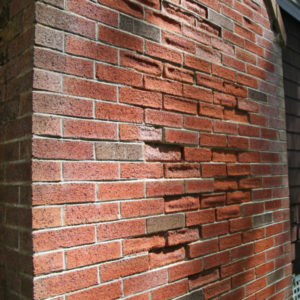
- Cracked or otherwise damaged masonry bricks
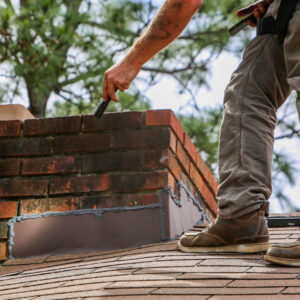
Depending on the extent and type of damage, resolution could include replacing certain components, repairing the masonry, repairing or replacing the chimney liner, and a partial or complete chimney rebuild job.
The Perfect Prescription for a Safe Chimney
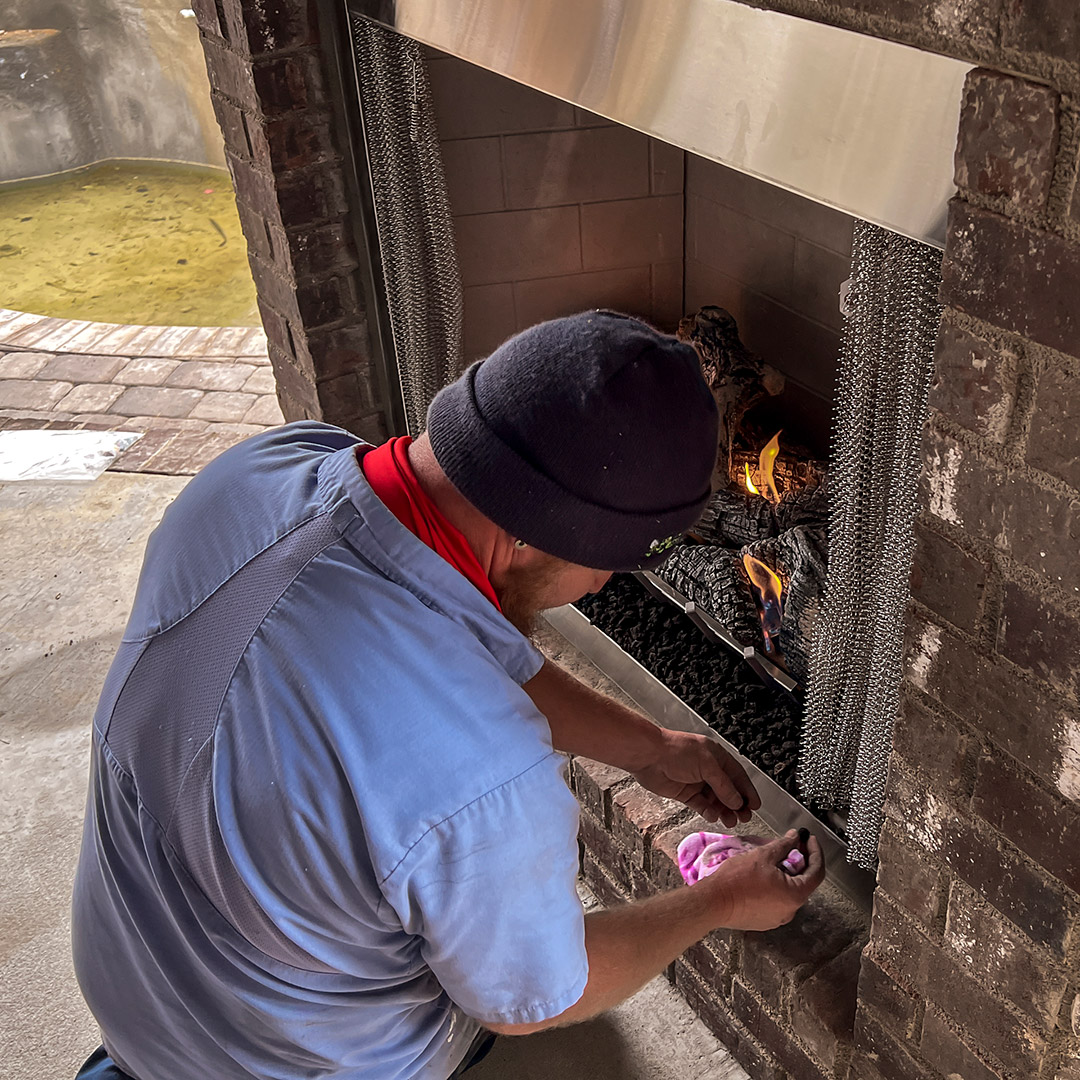
To recap, most chimney fires are started by creosote, which is formed by smoke condensation. You can reduce creosote and smoke by:
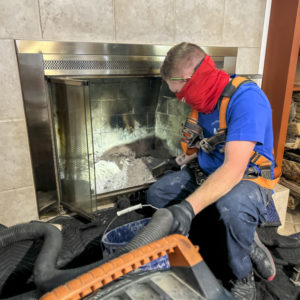
- Scheduling annual chimney sweeping
- Having your chimney inspected once a year
- Using the tips above to create less smoke with your fires
Call us first for all your chimney needs
The expert chimney technicians at Doodlebuggers are standing by to help with chimney sweeping, inspections, repairs and critical work following a chimney fire. Call 850-477-1151 in Pensacola or 850-243-0154 in Destin, or send us a note through our contact form.